How ZAKU Knives Elevates Experience Using the Blink Factor

The kitchen knife is one of the most common tools in a home. Most of us use one almost every day without thinking much about where it came from, how it was made, or why one knife might perform differently from another. This level of familiarity presents an interesting challenge for retailers. How do you change a customer’s mind about a product they think they know? How do you elevate something functional without making it feel inaccessible?

A visit to ZAKU Knives in Tokyo, Japan, demonstrates how a carefully designed retail experience can transform a familiar utensil into an object of craftsmanship, identity, and discovery. Located on Kappabashi Street, Tokyo’s kitchen and restaurant supply district, ZAKU occupies a historic and appropriate environment. The brand creates an experience that encourages customers to look more closely at the product, ask questions, and understand what makes each knife unique. ZAKU elevates a common household item into a premium product with a story behind it, creating a memorable shopping moment for the customer.

The Storefront Makes a Sharp First Impression

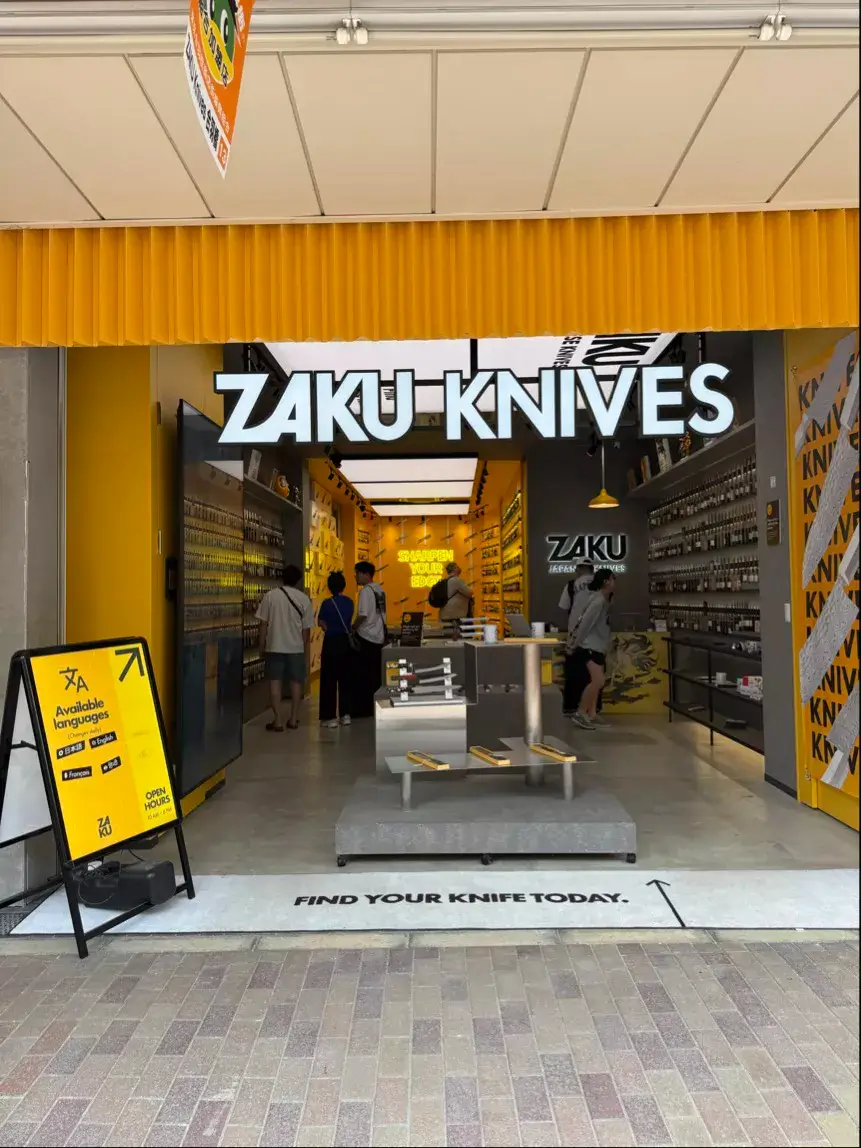
The experience begins even before you enter, with ZAKU’s bright yellow exterior. This bold color gives the store an energetic personality, making it easier to identify from the street. It also establishes a distinct visual identity for the brand in an area where many retailers sell similar products with more traditional branding. Visibility alone is not enough, and the store must provide a reason to stop and browse.
 
The yellow storefront acts as that initial interruption, creating the Blink Factor: a moment distinctive enough to capture attention and encourage a second look. However, getting noticed is only the first step. The experience inside needs to reward that attention.

From Product Display to Product Gallery 

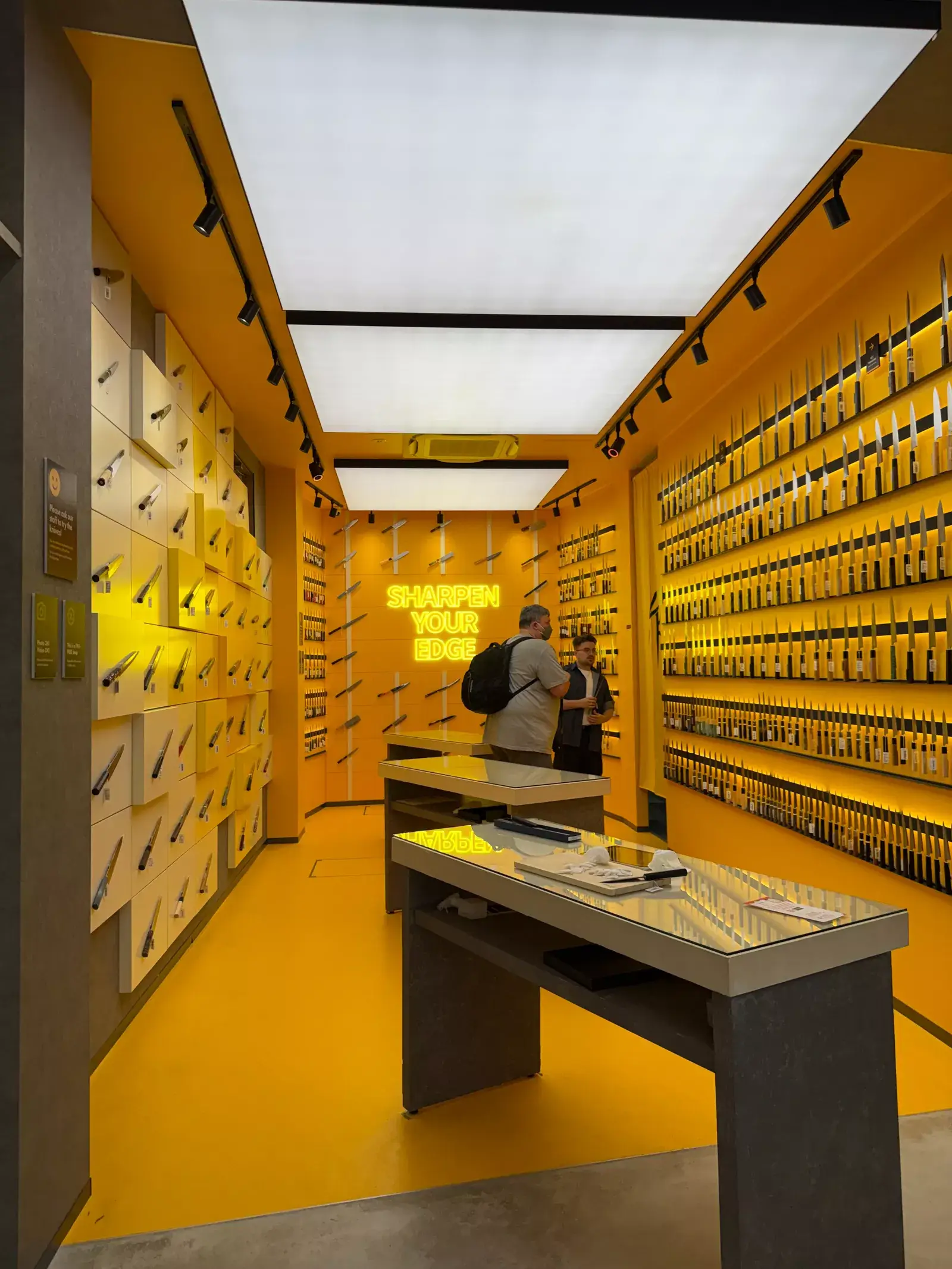
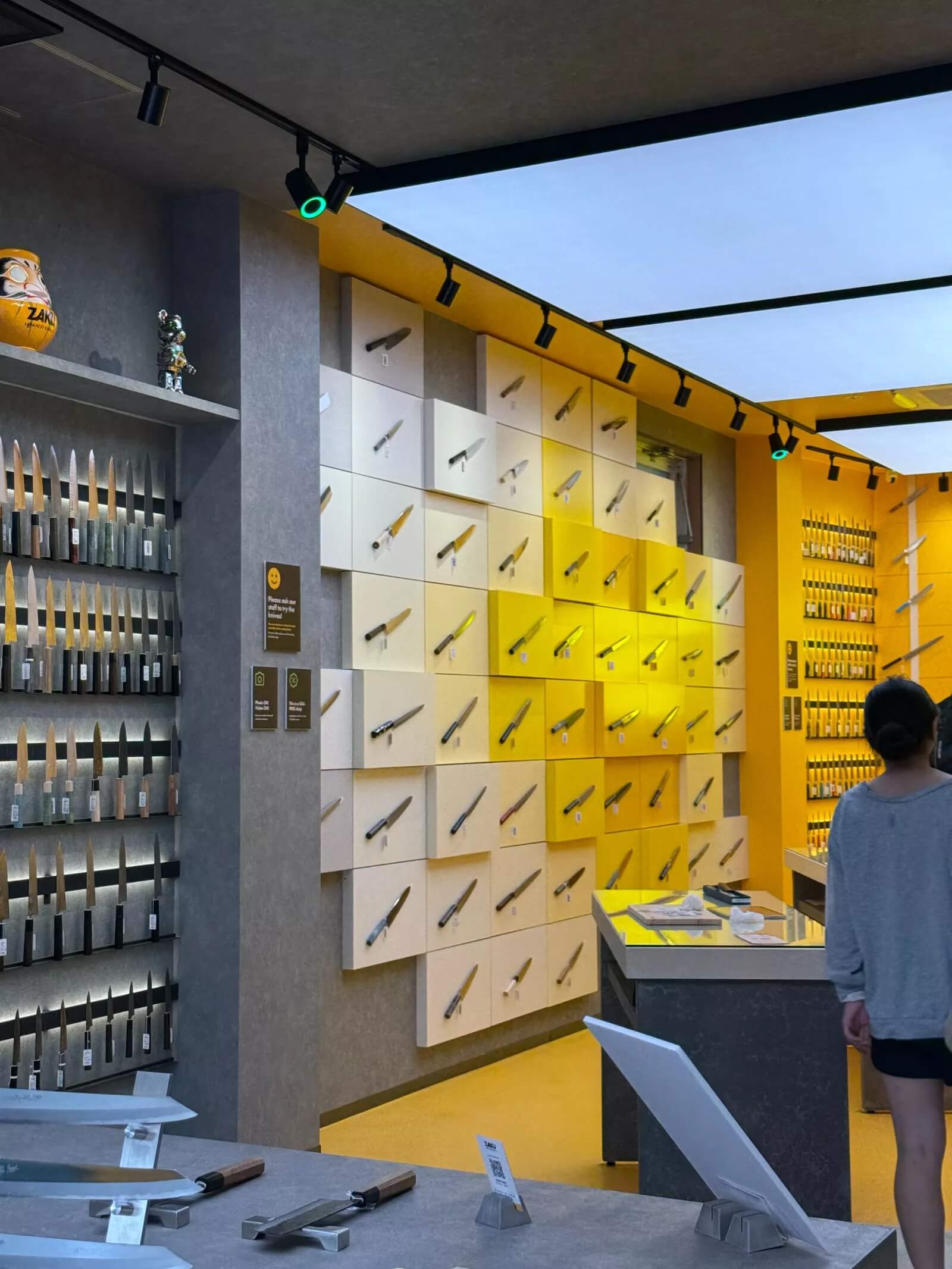
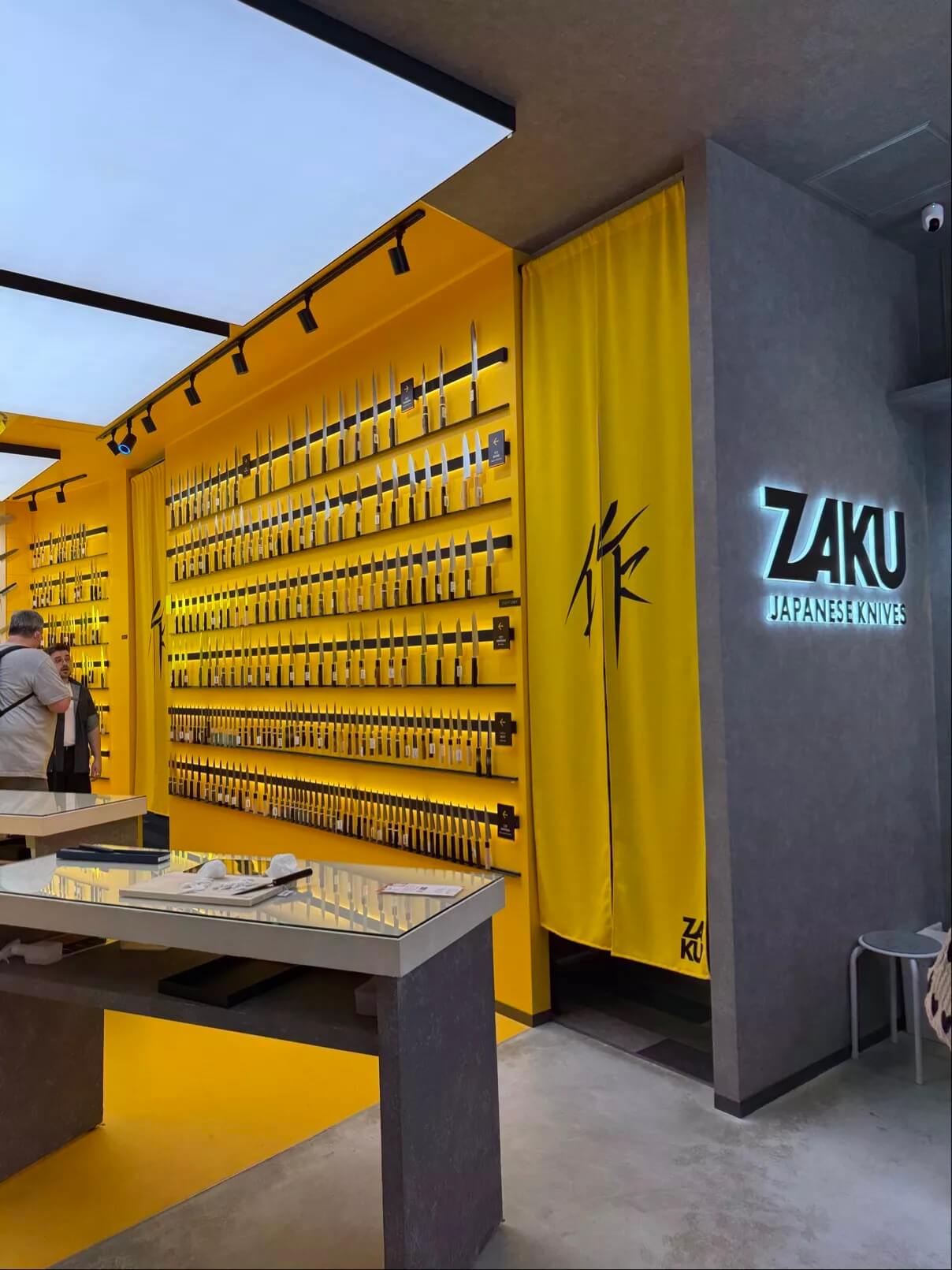
ZAKU carries hundreds of different knives, serving everyone from first-time buyers to professional chefs. The knives are crafted by Japanese artisans and presented by ZAKU through a singular visual identity and contemporary store environment. With such a wide variety, the store could easily become overwhelming. Instead, the knives are presented in a setting that feels much more streamlined than a conventional kitchenware shop. The displays highlight the blades, and the environment encourages customers to notice the differences in shape, material, finish, and handle design.
 
The presentation encourages customers to make more considered evaluations rather than focusing on basics like price. Customers begin to see each knife as a unique object with its own balance, intended use, and aesthetic character. The gallery-like displays convey value even before customers know the technical specifications. The space, lighting, and visual organization signal that these products deserve attention. The store provides a more compelling stage for functionality, in which the blade’s practical qualities become part of a larger story about expertise and craftsmanship.
 

Expertise Makes the Product Accessible 

Having a large selection only creates value when customers can understand it. For someone buying their first Japanese knife, the differences between blades might not be clear at first. Steel composition, edge type, weight, and style introduce additional complexity to the decision-making process.
 
ZAKU addresses this hurdle by offering a guided consultation. Staff members help customers navigate the collection and select a knife that suits their needs and experience level, with multilingual support for international visitors as well. This human guidance is an essential part of the experience because the most impressive knife in the store is not necessarily the right knife for every customer.
 
By asking about cooking preferences, preparation methods, and maintenance comfort levels, the conversation can evolve from “Which knife is best?” to “Which knife is best for you?” This transforms the service from a sales interaction into a consultation, and the employee becomes an interpreter between the customer and the product. Technical details become benefits, and an intimidating assortment becomes a guided process of discovery.

Personalization Turns Purchase Into Memory

ZAKU also offers free engraving on purchased knives. Although this may seem like a small addition, it plays an important role in enhancing the overall experience. Engraving transforms an item selected from a large assortment into something personal, connecting the customer to the purchase experience. Having a name or message engraved on the blade gives customers a stronger sense of ownership and makes the knife a more meaningful gift or travel keepsake.

Personalization is particularly effective here because it complements the product rather than distracting from it. ZAKU does not need to add an unrelated digital spectacle or elaborate activation. The service reinforces the qualities already associated with the knife: care, precision, and individuality.

The Experience Changes the Perception of The Product

What makes ZAKU strong comes from how several elements work together. The storefront creates visibility. The interior gives the product importance. The assortment creates discovery. Employee expertise provides confidence. Engraving adds a personal touch. 
 
Retailers do not always need to reinvent what they sell. Sometimes, the greater opportunity lies in helping customers see products differently. Creating the Blink Factor in retail starts with an instant emotional connection, but the experience is what creates value for the customer.